AI Applications
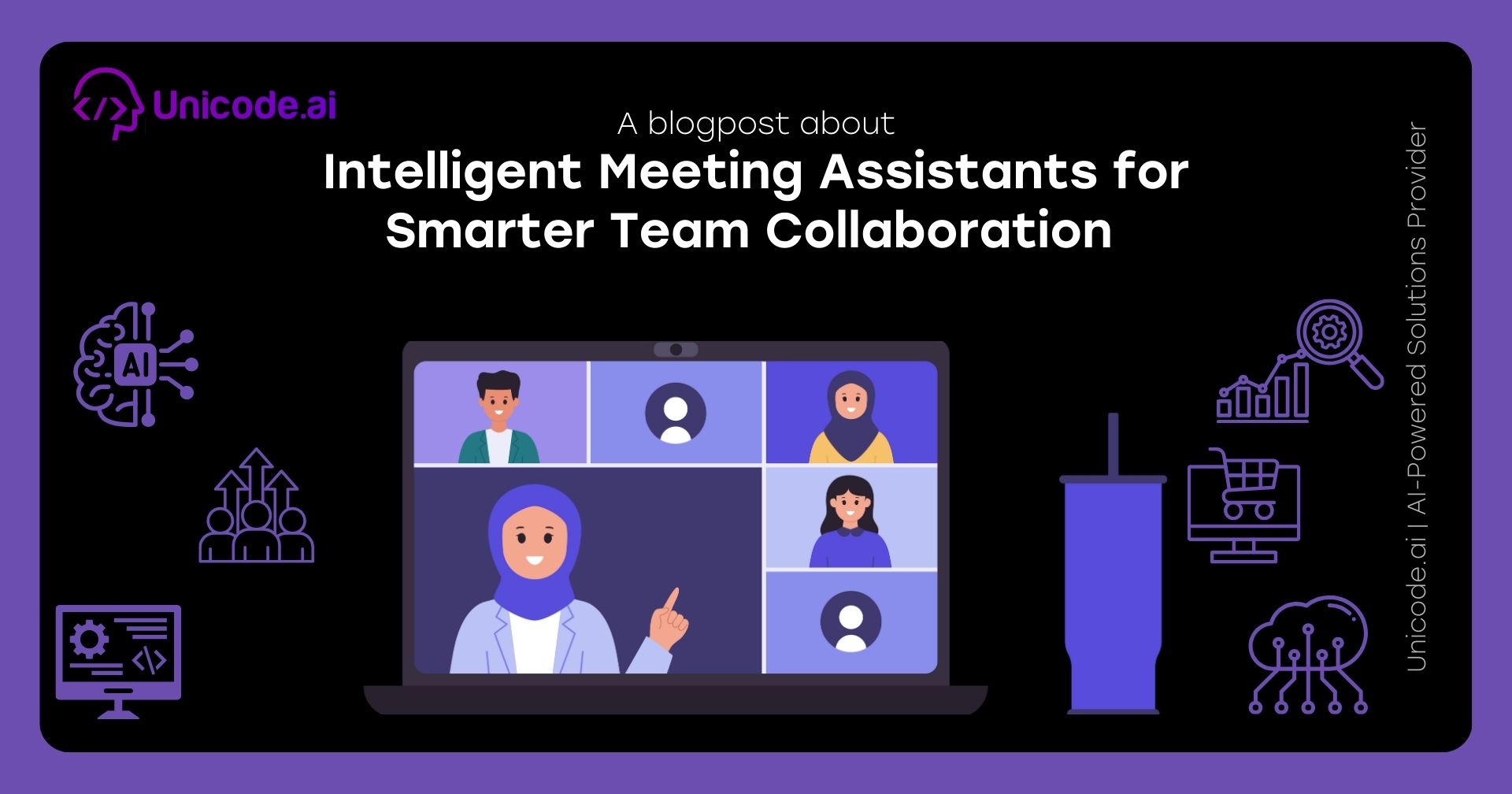
In today’s fast-paced business world, meetings are unavoidable—but they often feel like a drain on productivity, creativity, and time. Teams spend countless hours in discussions, yet outcomes often fall short of expectations. Imagine having a digital co-pilot that captures every key point, tracks action items, summarizes discussions, and even helps schedule follow-ups automatically. That’s exactly what intelligent meeting assistants do.
These AI-powered tools are no longer futuristic concepts—they are a present-day necessity. Businesses across industries are leveraging them to improve communication, reduce manual work, and make smarter, data-backed decisions. The global market for intelligent meeting assistants is booming, estimated at USD 2.44–3.67 billion in 2024, projected to reach USD 7.52 billion by 2029, USD 15.16 billion by 2032, and an astonishing USD 72.17 billion by 2034, growing at a CAGR of 34.7% from 2024–2034. These numbers reflect both the rising adoption and the increasing sophistication of these tools.
With enterprises embracing hybrid work models and global teams collaborating across time zones, the demand for enterprise-grade intelligent meeting assistant software has never been higher. Let’s explore how these tools are transforming meetings into productivity powerhouses.
Meetings are often seen as essential for collaboration, yet they frequently fail to deliver measurable results. In traditional setups, teams spend hours discussing issues, but many meetings lack follow-through. Studies show that professionals spend around 15 hours per week in meetings, and 67% of these meetings fail to produce actionable outcomes. For remote and hybrid teams, the challenge is even more pronounced. With 16% of employees fully remote and 28% working in hybrid models, communication gaps and misalignment are common.
Additionally, manual note-taking, back-and-forth scheduling emails, and follow-up tracking add to the inefficiency. For enterprise teams managing multiple projects and large-scale collaborations, these small inefficiencies compound into significant lost productivity.
Intelligent meeting assistants are designed to address these challenges by automating routine tasks, providing real-time insights, and ensuring teams remain aligned. Businesses using AI-driven meeting tools report 30% time savings on post-meeting tasks, highlighting the immediate ROI.
An intelligent meeting assistant is a software tool powered by artificial intelligence that automates meeting management, documentation, and follow-ups. It acts as a digital facilitator, capturing key discussion points, summarizing conversations, tracking action items, and integrating seamlessly with collaboration platforms.
Unlike traditional scheduling or note-taking tools, AI meeting assistants leverage real-time transcription, meeting summarization, voice-command productivity, and calendar automation to enhance efficiency. These capabilities allow teams to focus on discussions, decision-making, and problem-solving rather than administrative tasks.
Some advanced features include sentiment analysis in meetings, enabling managers to gauge team morale or detect potential conflict points, and enterprise workflow integration, which ensures that meeting outputs feed directly into ongoing projects or dashboards.
One of the most powerful functions of intelligent meeting assistants is AI-powered note-taking. Manual note-taking is prone to errors, omissions, and inconsistencies. AI assistants transcribe meetings in real-time, automatically highlight key points, and summarize discussions into concise minutes.
For example, platforms like Otter.ai intelligent meeting assistant and Fireflies.ai smart meeting notes capture every spoken word, identify critical decisions, and even detect follow-up items. This not only reduces human error but also ensures inclusivity, allowing remote and hybrid participants to stay aligned.
The meeting note-taker segment dominates the market with a 64.8% share, highlighting how businesses increasingly prioritize accurate documentation and actionable outputs.
Scheduling meetings across teams, departments, or time zones can be a logistical nightmare. Intelligent meeting assistants for remote collaboration simplify this by analyzing team availability, recommending optimal times, and automatically sending invites.
Cloud-based intelligent meeting assistant tools can integrate with Google Calendar, Microsoft Outlook, and Slack, reducing back-and-forth emails and improving efficiency. Over 65% of organizations rely on native platform features rather than third-party tools, indicating a preference for integrated, end-to-end solutions.
This functionality is particularly valuable in large enterprises, where coordinating between multiple stakeholders is complex. North America, for instance, accounted for ≈35–40% of the global AI meeting assistant market in 2024, with the US alone valued at USD 1.10 billion, demonstrating high adoption in enterprise-grade environments.
Forget manual follow-up emails and tracking spreadsheets. AI meeting assistants that track action items automatically assign responsibilities, set deadlines, and send reminders to participants. This feature ensures accountability and streamlines post-meeting execution.
Enterprise adoption is high, with 70.5% of deployments in large organizations, and 30% time savings on follow-up tasks have been reported in case studies. By eliminating the need for manual labor and redundant communications, teams can focus on execution and strategic initiatives.
Intelligent meeting assistants are more than digital note-takers—they enhance collaboration across multiple dimensions.
Real-time transcription converts spoken words into text instantly. AI-driven summarization then condenses these transcripts into actionable points, ensuring everyone stays aligned. Remote teams especially benefit, as summaries provide quick catch-up material for employees who miss meetings.
Advanced assistants also support voice-to-text for conferences and multi-language transcription, improving inclusivity and accessibility.
Voice-command productivity allows participants to interact with the assistant hands-free. Commands like “summarize this meeting,” “highlight action items,” or “schedule follow-up” improve efficiency and reduce interruptions.
These tools also enhance compliance and accessibility. Features such as live captioning and GDPR-compliant intelligent meeting assistant options allow organizations to meet legal and accessibility requirements without adding extra tools.
Modern intelligent meeting assistants integrate with platforms such as Microsoft Teams AI Companion, Google Meet live transcription AI, Zoom AI meeting assistant, Fellow.app meeting assistant, and Slack.
Integration ensures meeting outputs—summaries, action items, and analytics—flow directly into workflows and dashboards. This eliminates silos, speeds up execution, and enhances hybrid-work collaboration. Analytics dashboards can track meeting ROI metrics, providing insights into time saved and productivity gains.
The adoption of AI meeting assistants brings measurable improvements to productivity, communication, and decision-making.
Automation allows teams to spend less time on administrative tasks and more on strategic work. Intelligent assistants reduce meeting set-up time, eliminate redundant transcription costs, and auto-extract action items.
Organizations using these tools report up to 30% time savings post-meeting. With features like AI meeting assistant with real-time transcription, teams can review minutes instantly and avoid repetitive discussions.
Accurate, accessible documentation ensures all team members remain on the same page. Miscommunication is minimized, decisions are clearly tracked, and hybrid teams maintain cohesion.
North America led adoption in 2024, representing ≈35–40% of the global market, with projected growth to USD 17.14 billion by 2034 in the US alone. These numbers underscore the growing reliance on AI assistants for enterprise-grade collaboration.
AI meeting assistants provide analytics on participation, recurring topics, and action completion rates. Advanced features like sentiment analysis in meetings and emotion-aware AI help managers understand team engagement and morale.
By tracking meeting ROI metrics, organizations can identify bottlenecks and improve process efficiency. AI tools also integrate with knowledge bases, creating a continuous feedback loop for organizational learning.
While AI assistants are transformative, there are challenges organizations need to manage.
Recording meetings involves sensitive data. Compliance with GDPR, HIPAA, and other regulations is crucial, especially in healthcare and finance. Tools like Google Meet AI and secure intelligent meeting assistants for healthcare address these concerns with encryption and regulatory compliance.
AI assistants require training and organizational buy-in. Teams need time to understand features like meeting summarization, action-item tracking, and calendar automation to maximize productivity. Organizations that invest in onboarding and best-practice workflows see higher adoption rates and ROI.
Several tools dominate due to functionality, adoption, and enterprise readiness.
Otter.ai excels in real-time transcription, meeting summarization, and multi-platform integration, including Zoom and Google Meet. It is widely used for remote collaboration and hybrid teams.
Embedded in Microsoft Teams, this assistant offers transcription, action-item tracking, and automated summaries, eliminating reliance on third-party note-taking tools.
Zoom’s AI companion transcribes meetings, generates highlights, and suggests follow-ups, enabling quicker execution and accountability.
Fellow.app focuses on agenda management, action-item tracking, and team check-ins, supporting enterprise-grade intelligent meeting assistant software needs for large teams.
Implementing best practices ensures AI assistants deliver maximum value.
Define agendas and outcomes. AI tools perform optimally when they know what to capture and prioritize.
Share summaries immediately, assign tasks, and integrate insights into workflows. This maximizes ROI and ensures action items are completed.
Sync assistants with calendars, project management tools, and communication platforms. Cloud-based tools dominate the market, providing scalability and real-time updates for global teams.
The future of AI-powered meeting assistants is bright. Predictive AI may suggest agenda items, anticipate blockers, and facilitate brainstorming. Features like emotion-aware AI, sentiment analysis, and enterprise knowledge-base integration are set to drive the next wave of innovation.
Global adoption is projected to accelerate, with the market reaching USD 72.17 billion by 2034 and North America continuing to lead, reflecting both technology maturity and enterprise reliance on AI-driven collaboration tools.
Intelligent meeting assistants are no longer optional—they are a strategic necessity. From automating note-taking and scheduling to providing actionable insights, these AI-powered tools save time, improve communication, and drive better decision-making. With growing enterprise adoption, advanced features, and an exploding market, AI assistants are set to redefine team collaboration for the modern workforce.
Intelligent meeting assistants are AI-powered tools designed to automate meeting management, note-taking, and follow-ups. They work by capturing key discussion points, summarizing conversations, tracking action items, and integrating seamlessly with collaboration platforms. By leveraging real-time transcription and calendar automation, these assistants help teams focus on decisions rather than administrative tasks.
Intelligent meeting assistants improve team productivity by automating routine tasks such as note-taking, scheduling, and action-item tracking. Teams save significant time post-meeting, with studies reporting up to 30% time savings on follow-ups. By providing instant summaries and accurate meeting documentation, these assistants reduce miscommunication and allow team members to spend more time on strategic work.
Yes, AI meeting assistants can seamlessly integrate with collaboration tools like Microsoft Teams, Zoom, Google Meet, Slack, and project management platforms. This integration ensures meeting outputs, including summaries, action items, and analytics, flow directly into workflows, improving team alignment, reducing redundant communication, and enhancing hybrid work collaboration.
Intelligent meeting assistants prioritize security and compliance by adhering to GDPR, HIPAA, and other data protection regulations. Tools like secure Google Meet AI and enterprise-grade assistants use encryption and privacy features to protect sensitive meeting data, making them suitable for healthcare, finance, and other industries where confidentiality is critical.
When choosing an intelligent meeting assistant, look for features like AI-powered real-time transcription, meeting summarization, action-item tracking, smart scheduling, voice-command productivity, sentiment analysis, and multi-platform integration. These features ensure meetings are more productive, decisions are documented accurately, and follow-ups are executed efficiently.
Businesses can maximize the benefits of intelligent meeting assistants by setting clear meeting objectives, leveraging AI-generated summaries for follow-ups, and integrating the assistant with existing calendars and project management workflows. Training teams to use these tools effectively ensures higher adoption rates, measurable time savings, and improved overall team collaboration.
Ready to Transform Your Business with AI?
Let's discuss how our AI solutions can help you achieve your goals. Contact our team for a personalized consultation.
© current_year AI Solutions. All rights reserved. Built with cutting-edge technology.
