AI Applications
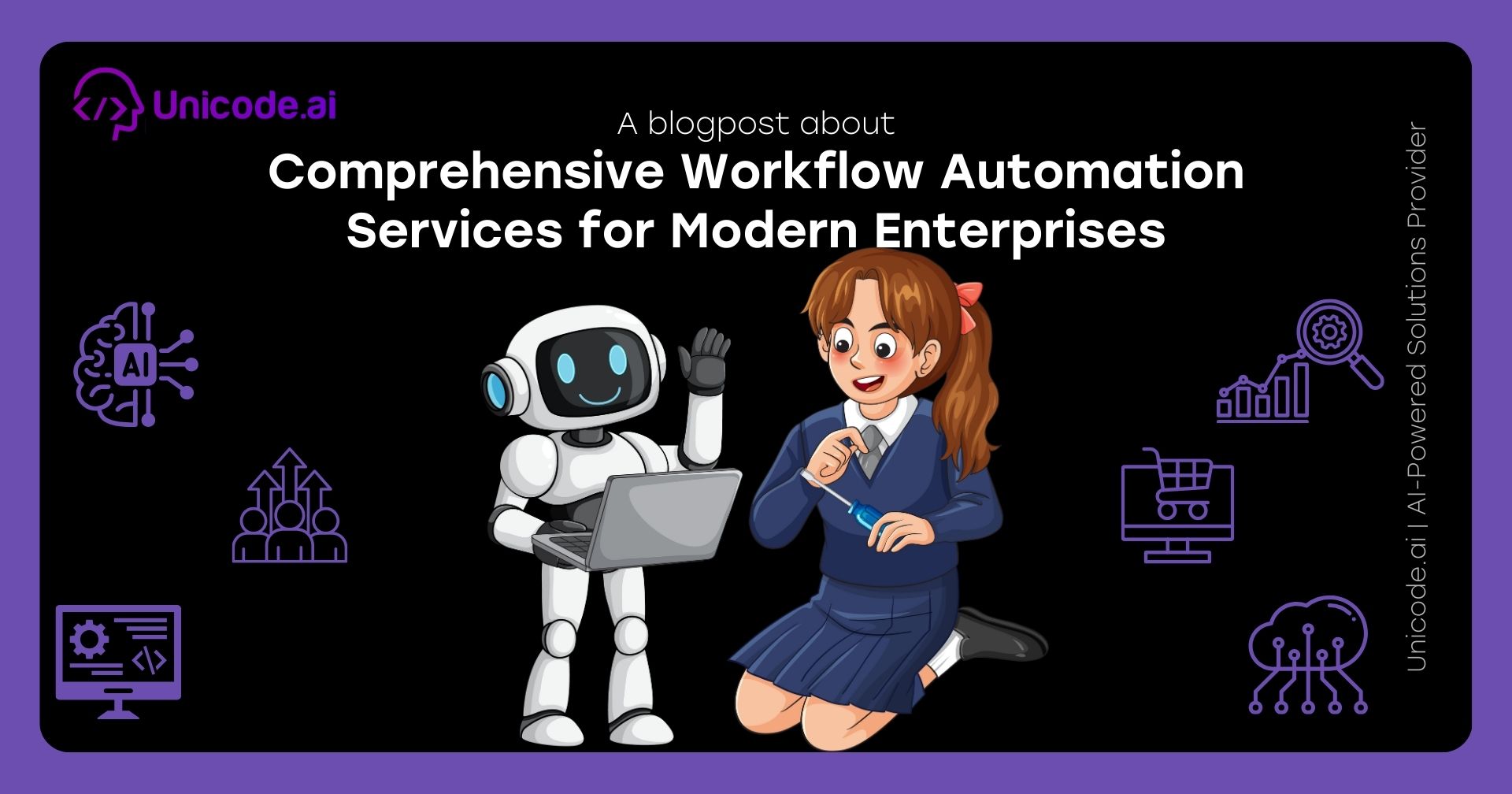
Workflow automation services have evolved from being a convenience to a strategic imperative in the modern enterprise. Today, companies face increasing complexity, from distributed teams and remote workforces to multi-system operations and massive data flows. Workflow automation services allow organizations to automate repetitive tasks, streamline processes, improve compliance, and scale operations efficiently.
According to market forecasts, the global workflow automation market will grow from USD 21.17 billion in 2025 to USD 80.57 billion by 2035, at a 14.3% CAGR. Alternate forecasts show even higher growth, reaching USD 87.7 billion by 2035, reflecting widespread adoption across sectors. Workflow-as-a-Service (WaaS), a cloud-delivered model of automation, is projected to grow even faster—from USD 10.7 billion in 2025 to USD 298.4 billion by 2035, at a staggering 39.5% CAGR. These numbers highlight the enormous potential and strategic importance of workflow automation services.
Beyond numbers, workflow automation fundamentally transforms how teams operate. It reduces manual workload, accelerates decision-making, minimizes errors, and improves operational transparency. By connecting people, systems, and processes seamlessly, organizations can focus on value-driven tasks rather than repetitive work.
A workflow automation service focuses on identifying, designing, and automating workflows within an organization. It is not just about software deployment; it involves process analysis, consulting, integration, and continuous optimization.
These services help organizations define workflow rules, set triggers, and map approvals across teams and systems. They also integrate with existing tools such as CRMs, ERPs, project management platforms, HRMS, and finance software. Businesses leveraging workflow automation services often see a 25–30% productivity lift, 40–75% error reduction, and improved employee satisfaction by 15–35%.
Moreover, enterprises adopting these services can realize >400% ROI within three years, with 60% achieving payback in less than 12 months, making workflow automation a high-value investment for operational efficiency.
A workflow automation solution combines technology, expertise, and process orchestration to automate tasks end-to-end. Solutions may include workflow design tools, low-code/no-code platforms, AI-powered decision engines, robotic process automation (RPA), and cloud-based orchestration tools.
Solutions address critical business functions including finance, HR, marketing, sales, operations, and customer support. By standardizing repetitive processes, companies reduce operational costs and improve consistency. For example, automating invoice approvals can cut processing time from weeks to hours, while automated marketing campaigns improve email conversion rates by up to 58% compared to manual methods.
A workflow automation platform acts as the backbone for creating, executing, and monitoring automated workflows. Modern platforms offer:
Platforms allow organizations to scale automation across departments, monitor real-time performance, and improve compliance. Companies adopting platforms for end-to-end automation report 58% of reporting and planning cycles automated, accelerating decision-making significantly.
Workflow automation software enables organizations to move beyond spreadsheets, emails, and manual task management. Key functionalities include:
Software reduces human error, ensures compliance, and provides a centralized view of operational performance. Organizations report typical productivity gains of 25–30% and cost savings ranging from USD 10,000 to several million annually, depending on scale and adoption.
Workflow automation tools are the building blocks for process automation. These include:
The correct combination of tools allows organizations to automate 50% of work activities, according to McKinsey, creating more capacity for strategic initiatives.
A workflow automation system integrates people, tasks, data, and processes into a unified flow. Core features include:
Systems ensure tasks reach the right person at the right time. Enterprises that implement these systems see lead volume improvements of +80%, lead-to-customer conversion gains of +75%, and qualified leads growth of +451%.
Workflow automation technology combines AI, machine learning, RPA, low-code platforms, API orchestration, and analytics to enable intelligent workflows. AI-driven automation can predict task outcomes, route tasks to the right employee, and optimize processes based on historical data.
Automation technology reduces operational overhead, shortens cycle times, improves service quality, and supports compliance. It is also a key enabler for remote work, where cloud-based orchestration ensures 35 million U.S. employees in 2025 can stay productive from distributed locations.
A workflow automation provider delivers consulting, implementation, and ongoing optimization services. They help organizations:
High-performing providers focus on end-to-end process efficiency, ensuring adoption, compliance, and scalability. Companies using trusted providers report payback periods of less than 12 months and measurable cost reductions.
A workflow automation vendor supplies ready-made modules, integration services, and technical support. Vendors often offer vertical-specific solutions, such as:
Selecting the right vendor ensures high adoption rates, operational reliability, and the ability to scale automation across departments and geographies.
A workflow automation company specializes in delivering enterprise-grade automation, combining software, services, and consulting. They cater to:
Companies report 20–35% revenue growth, faster time-to-market, and improved operational KPIs after adopting enterprise workflow automation.
Business process automation (BPA) is the strategic practice of automating entire business workflows. BPA ensures:
BPA is often applied to finance, HR, marketing, and customer service, generating measurable efficiency gains.
Process orchestration manages multi-step workflows across systems and teams. It ensures that every task flows smoothly and triggers the correct next step. Organizations using process orchestration report 70% faster cross-department task completion and significant reductions in manual intervention.
Low-code workflow automation allows non-technical users to design workflows visually. Drag-and-drop builders reduce dependency on IT teams, enabling business users to automate approval processes, document handling, and notifications efficiently.
No-code workflow automation makes automation accessible to teams without programming knowledge. Marketing, HR, finance, and operations teams can create workflows that execute repetitive tasks with minimal IT involvement, accelerating adoption and reducing development costs.
Cloud-based workflow automation provides remote accessibility, scalability, and reduced infrastructure costs. Cloud platforms allow teams to collaborate seamlessly from anywhere, supporting distributed teams, hybrid work, and global operations.
AI-powered workflow automation uses machine learning, NLP, and predictive analytics to automate decision-making. AI can:
Organizations leveraging AI-powered automation see up to 80% reduction in decision delays and improved service quality.
Hyper-automation services integrate AI, RPA, analytics, and low-code/no-code platforms to automate complex, multi-department processes. Hyper-automation accelerates digital transformation and drives operational cost reductions of up to 30%, especially in finance, BFSI, and logistics.
End-to-end workflow automation ensures complete automation from task initiation to completion. It eliminates gaps, reduces delays, and maintains consistent process outcomes across all departments.
Digital workflow automation converts traditional, manual processes into fully digital ones, eliminating paper-based operations, manual approvals, and repetitive administrative tasks. This leads to faster turnaround times, improved compliance, and better operational transparency.
Automated workflow management provides visibility, task tracking, and process performance analytics. It enables organizations to detect bottlenecks, optimize task routing, and ensure SLA compliance. Reports indicate qualified leads improve by +451% when workflow management is automated.
Workflow integration services connect disparate business applications, enabling seamless data flow and task automation. Integrations between CRM, ERP, HRMS, and analytics platforms ensure accurate, real-time information exchange.
Mapping workflows before automation identifies inefficiencies and bottlenecks. Automated processes are then applied to eliminate unnecessary steps, reduce delays, and increase accuracy. Proper workflow mapping leads to faster ROI and smoother adoption.
Consulting services guide businesses through:
Consulting ensures organizations select the right processes, tools, and adoption strategies.
Implementation includes workflow design, system configuration, integrations, trigger setup, and user training. Companies implementing workflows effectively achieve 50–76% standardization of daily tasks across operations.
Remote teams benefit immensely from workflow automation. Cloud-based workflows, automated notifications, and task routing ensure distributed teams remain aligned, productive, and accountable. 35 million U.S. employees are expected to work remotely by 2025, further driving demand.
SMEs gain efficiency and scalability through low-cost, easy-to-deploy workflow automation tools. Studies show SMEs report 65% success rates with automation, higher than large enterprises at 55%, due to agility and faster decision-making.
Enterprises use large-scale automation for finance, HR, sales, marketing, customer service, and operations. These deployments leverage AI, process orchestration, and analytics to manage thousands of workflows concurrently.
Enterprises can realize >400% ROI within three years, with 60% achieving payback within 12 months. Productivity lifts of 25–30%, error reduction of 40–75%, and annual cost savings ranging from USD 10k to several million underscore its financial impact.
Key benefits include:
Automation benefits scale as organizations grow, delivering measurable performance improvements across all departments.
Automation is applied across:
Best practices include:
Adoption remains uneven:
Targeting areas with the highest efficiency gains accelerates adoption.
Key trends include:
The market is expanding rapidly:
Workflow-as-a-service provides cloud-hosted automation solutions on a subscription basis. WaaS allows organizations to deploy scalable workflows without heavy infrastructure investments, accelerating ROI and enabling rapid process standardization.
Automates invoice approvals, expense management, reconciliations, and reporting. Reduces processing time and improves accuracy.
Automates onboarding, payroll, performance reviews, leave management, and compliance documentation.
Automates lead scoring, CRM updates, proposal approvals, and contract routing to improve conversion rates.
Automates ticket routing, escalations, responses, and customer feedback tracking.
Automates campaigns, content approvals, lead nurturing, and analytics reporting.
Automates order processing, refunds, inventory updates, and customer notifications.
Automates patient intake, claims processing, lab requests, and compliance reporting.
Automates shipment tracking, carrier assignment, inventory management, and delivery notifications.
Automates subscription billing, onboarding, renewals, and analytics reporting.
Automates budget approvals, leave approvals, procurement, and document validation.
Reduces invoice processing time from weeks to hours while ensuring accuracy.
Ensures timely document submission, training schedules, and HR compliance.
Automates email sequences, follow-ups, and CRM updates for higher conversions.
Automates audits, policy updates, and reporting to reduce risk.
Scalable, low-cost automation solutions help startups manage high-volume processes efficiently with limited resources.
Workflow automation services are no longer optional—they are a strategic imperative. With proven ROI, operational efficiency gains, and market growth projected to USD 80–298 billion by 2035, organizations that embrace automation will achieve:
Enterprises, SMEs, and remote teams all stand to benefit. The combination of AI-powered, cloud-based, and low-code workflow automation platforms ensures that businesses can stay competitive and thrive in the digital-first era.
Workflow automation is not just about efficiency—it’s the operating system of modern business, enabling smarter decisions, faster delivery, and sustainable growth.
AI simplifies knowledge management by automating how information is organized, searched, and delivered across the organization. When AI simplifies knowledge management, it reduces manual tagging, eliminates information silos, and ensures employees can quickly access relevant knowledge without wasting time searching through disconnected systems.
AI is important for managing knowledge overload because it can analyze massive volumes of data and surface only what is relevant. By addressing knowledge overload with AI, enterprises reduce time spent searching for information and improve productivity, decision-making speed, and overall operational efficiency.
AI-powered search improves knowledge retrieval accuracy by understanding intent, context, and natural language instead of relying on basic keywords. This means AI-powered knowledge retrieval delivers more precise results, helping employees find the right documents, insights, or experts faster and with fewer errors.
Machine learning plays a critical role in AI-driven knowledge management systems by continuously learning from user behavior and content usage. As machine learning improves knowledge management, systems become smarter over time, predicting what information users need and delivering more relevant insights proactively.
The long-term benefits of using AI for knowledge management include faster decision-making, reduced operational costs, higher productivity, and measurable ROI. By adopting AI-based knowledge management systems, organizations gain sustainable efficiency, improved accuracy, and a scalable foundation for future growth.
AI-driven knowledge management improves collaboration by breaking down information silos and connecting teams through shared, intelligently organized knowledge. When AI enhances knowledge collaboration, employees can easily access shared insights, discover subject-matter experts, and work together more efficiently across departments or remote teams.
Ready to Transform Your Business with AI?
Let's discuss how our AI solutions can help you achieve your goals. Contact our team for a personalized consultation.
© current_year AI Solutions. All rights reserved. Built with cutting-edge technology.
